Ing Logowanie
Go to https://moje.ing.pl by typing the address into the URL bar, not via search ads. Verify the padlock icon; the certificate must cover *.ing.pl with a trusted issuer. Use current Chrome, Firefox, Safari, Edge. Prefer a private network or cellular data; stop VPN during entry.
Have your client number, secret phrase, second factor ready. The safest option: push confirmation in the official mobile app. For SMS codes, keep the phone time in sync, signal stable, roaming enabled while abroad. On a shared PC, switch to the on-screen keypad.
If you see “invalid data” or “session expired”, clear cookies for ing.pl, then try a new session. Turn off extensions that intercept scripts (ad blockers, script filters), allow pop-ups for confirmations, enable JavaScript. Time must match your region; auto-sync fixes most drift issues.
Multiple failed attempts trigger a short lock. Wait 15–30 minutes, then use the recovery flow: confirm identity via customer number plus a one-time code from the app or SMS, set a fresh secret. If the profile stays blocked, contact support via the phone on your card or the help line listed inside the app.
Extra tips for stable access: update system roots, remove old saved credentials in the browser, avoid autofill for the secret phrase, check that third-party cookies for ing domains stay allowed during the process. For corporate profiles, use the dedicated portal URL from your contract, not the retail entry point.
Setting up a Moje ING (ING Bank Śląski) online banking account: requirements and registration steps
Have a Polish mobile number for SMS codes, a valid ID (dowód osobisty) or passport, PESEL, email, an active current account or a debit card from the bank, plus the client number if you received one.
Use a trusted device, an up-to-date browser, private network access, disabled password autofill, recent OS security patches.
On the web portal, choose Pierwsze logowanie. Enter your client number or card number with PESEL, confirm via SMS. Create a unique identifier, set a long password with mixed character types, define a mobile PIN for the app.
Install the mobile app from the official stores. Pair the device during the web session via the device management menu, scan a QR or type a pairing code, confirm via SMS, set a 4–8 digit PIN, enable biometrics if available. Next time, approve operations with push prompts where offered.
No account yet? Open a personal account via the web form or at a branch; complete identity verification using the methods presented in the application flow. After activation, use Pierwsze logowanie to set credentials.
Security tips: use only the domain ing.pl; verify the padlock plus the exact address before entering data. Never share codes via phone, chat, email. Avoid public Wi-Fi. Lock the app with biometrics plus a PIN. Suspect fraud? Block the card quickly via the portal or the official helpline.
Access recovery: use the I forgot option on the portal, verify with ID details plus an SMS code; if this fails, call the number shown on the site or visit a branch with an ID document.
For Dutch speakers, the action equals inloggen; the Polish button reads Zaloguj. The domain string ing appears in the trusted address only: ing.pl.
Official guidance: https://www.ing.pl/indywidualni/moje-ing
Locating the correct login page: ING Poland vs ING Netherlands (ing inloggen) and phishing checks
Enter the address manually: https://www.ing.pl for PL, https://www.ing.nl for NL. Check the padlock. Open the certificate details: Organization should contain “Bank Śląski S.A.” on PL sites, “Bank N.V.” on NL sites. Avoid links from email, SMS, ads.
Correct portals
- PL retail: https://www.ing.pl (public pages), https://login.ingbank.pl (auth gateway). Paths often include “moje”. Footer should reference a Polish entity with “śląski”.
- NL retail: https://www.ing.nl, https://mijn.ing.nl, https://bankieren.mijn.ing.nl. The page usually shows the term “inloggen”. Business traffic often uses subpaths or subdomains with “zakelijk”.
- Do not trust lookalikes such as extra words before/after the base domain, e.g., security-ing.pl, ing.nl.verify.example.com, ing-support.net. Only ing.pl or ing.nl as the base domain is valid.
Phishing checks
- Always HTTPS with TLS 1.2+ or TLS 1.3. No certificate warnings. Certificate Subject/Organization must match the country site: “... Bank Śląski S.A.” for PL, “... Bank N.V.” for NL.
- Language hints: PL pages show Polish UI, NL pages show Dutch UI with “inloggen”, “mijn”. Mixed-language pages are suspicious.
- No URL shorteners, no random numbers in the host, no extra hyphens near the brand word.
- Type the address or use a bookmark created by you. Skip QR codes from unsolicited messages.
- Never submit full card PIN, CVV, or full one-time codes on a single page. The real site splits sensitive actions into multiple screens.
- Mismatch signals: different favicon than usual, poor typography, missing cookie banner, forms that load from a third-party domain.
- Device safety: update browser, disable risky extensions, use a hardware key or app-based approval if offered by your bank.
- Quick domain check: base domain equals ing.pl for PL, ing.nl for NL. The part immediately left of the base domain may vary (e.g., login., mijn., bankieren.) yet the ending must be .ing.pl or .ing.nl.
- Text check for NL pages: visible “inloggen” on the entry button or link.
- Company name hint for PL pages: presence of “śląski” in the legal name in the footer.
Desktop login walkthrough in Moje ING: using Client ID/username and one-time codes
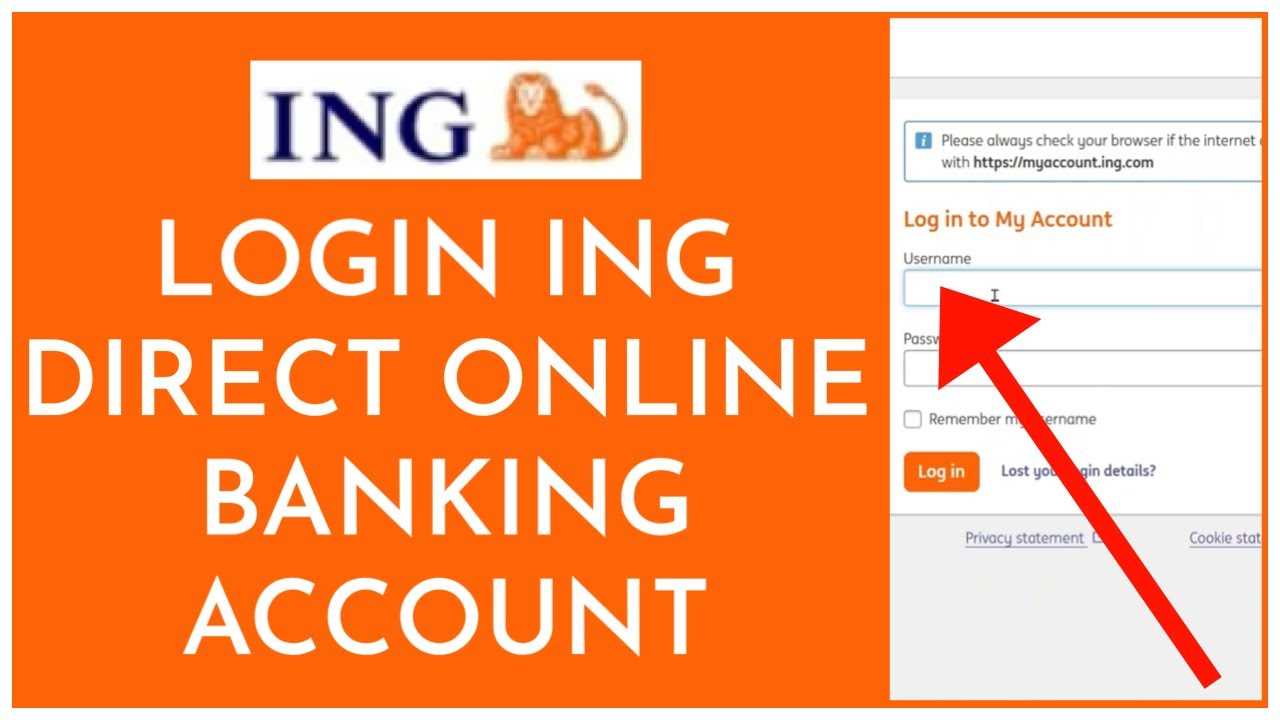
Use a private browser window, go to https://moje.ing.pl via a manual URL entry or a trusted bookmark. Avoid search links.
Verify the address bar shows moje.ing.pl with HTTPS. Click the lock icon, review issuer details plus expiry. For users in śląski, the URL stays identical.
Pick an identifier. Option A: Client ID, digits only, no spaces. Option B: username, a custom alias you set earlier. If unsure, hit the reminder link on the page.
Type your secret phrase, then press Continue.
Confirm through the Moje ing mobile app: receive a push alert, open the app, approve with PIN or biometrics within 60 seconds.
Use SMS: a 6-digit code arrives within roughly 30 seconds, valid for 2 minutes. Enter the code, press Confirm.
Legacy code card: if still active, the page will ask for a specific position, e.g., B4. Enter the value from your card, press Confirm.
After success, the desktop panel will load. If a device trust prompt appears, mark personal hardware as trusted only on your PC, skip this on shared machines.
No code received via SMS: check signal, airplane mode off, number listed in your profile, then request a new code.
Alias mismatch: try your numeric Client ID. Avoid typos, check keyboard layout.
Access blocked after multiple errors: wait 15 minutes, or verify via the Moje ing app to lift the block.
Browser autofill may insert wrong values; prefer manual entry.
Dutch locale: the button may display inloggen.
Mobile access in Moje ING: biometric login, Mobile Authorization, and device pairing
Enable Biometrics via Profile > Security > Biometrics, confirm with your PIN, then use Face ID, Touch ID, or fingerprint for quick sign-in.
Switch authorizer to Mobile Authorization in Security > Authorization method. For each transfer, payee edit, or limit change, the app shows amount, recipient, partial IBAN. Tap Approve, confirm with biometric or PIN, or choose Reject if a detail looks off.
Pair a phone via Profile > Devices > Add. Use a QR shown on the web portal then scan in the app, or enter an SMS code received to your number. Name the device, finish with biometric setup.
No push prompt? Check notification permission for this app, allow app use with screen off, keep mobile data active, set time to auto, disable VPN or proxy, relaunch the app, if still no prompt remove the device in Profile > Devices then pair again.
Safety tips: never share codes, lock the phone with PIN or biometrics, keep the system updated, avoid root or jailbreak. If the vendor name contains śląski, you are dealing with the correct bank. Dutch term inloggen equals sign-in.
| Feature | Menu path | What you see | Tip |
|---|---|---|---|
| Enable Biometrics | Profile > Security > Biometrics | Face, Touch, or fingerprint toggle | If the toggle is greyed out, remove root or jailbreak first |
| Mobile Authorization | Security > Authorization method | Push prompt with amount, recipient, partial IBAN | Compare data in the prompt with the data on the summary screen before Approve |
| Pair new device | Profile > Devices > Add | QR on web, scanner in app, or SMS code field | Give a unique device name for quick revoke later |
| Revoke a device | Profile > Devices > select device > Remove | Immediate removal message | Revoke at once if the phone is lost or sold |
| Fix missing push | Device settings | Notifications, mobile data, time sync | Allow alerts, keep data active, set time to network, retry pairing if needed |
Recovering access: reset Client ID/username, change password/PIN, and unblocking after failed attempts
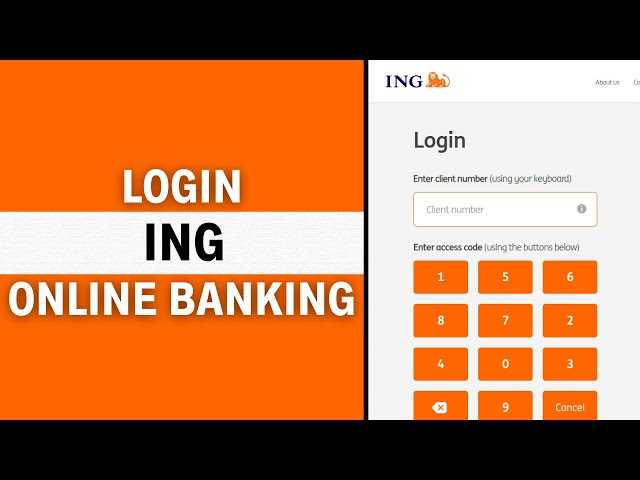
Use the inloggen screen’s “Forgot Client ID/username” or “Forgot password” link first; complete identity checks on the official *.ing.pl site, then set new credentials and sign in again.
Reset Client ID/username
Open the access page and choose the recovery option for the identifier. Provide data requested on-screen (for example: national ID details, selected personal info, or masked account/card data) and confirm with a one-time code sent by SMS or via the mobile app. Your client identifier will be shown or sent securely after verification; store it in a password manager and avoid emailing it to yourself. If your phone number changed or you cannot receive codes, visit a śląski branch with a valid ID to update contact details before retrying recovery.
Change password/PIN
On the same inloggen page, select the password reset path, verify identity with two factors, then create a new password that is long, unique, and not reused on other sites. Update any saved credentials in your browser or manager to prevent auto-filling the old string. For the mobile app, use “Reset app PIN” (or reinstall and re-pair the device); approve pairing with an SMS code or confirmation in the web portal, then set a new mPIN on the device. If the app shows a trusted-device error, remove the old device under Security → Devices, then pair again.
After several incorrect entries, access may be temporarily blocked. Wait for the on-screen timer to expire or use self-unblock with an SMS code if offered. If you no longer have the registered phone or the profile is fully locked, call the helpline listed in the Contact section or visit a śląski branch with ID for manual unblocking. Do not follow links from messages; type the address manually and confirm the certificate of the *.ing.pl domain. Keep the SIM active, disable call/SMS filtering during the process, and retry from a different browser or network if verification codes or forms fail to load.
Quick checklist: ensure the correct client number/username, confirm the phone can receive SMS, clear stale autofill entries, verify time/date on your device, and avoid repeated attempts in rapid succession to prevent additional locks. If you use Moje ing on multiple devices, complete recovery on one device only, then re-pair others.
Fixing frequent login issues: browser cookies, cache, 3-D Secure SMS, VPN/proxy, and time sync
Allow cookies for the service domain; clear site data for the last 7 days; reopen the browser; retry sign-in.
Browser cookies, cache
Enable cookies for the site, plus for embedded 3-D Secure processors; in Chrome: Settings > Privacy & security > Cookies & other site data > Allow all cookies, then Site settings > View permissions & data stored across sites > search the service domain (e.g., ing.pl) > Clear data; in Firefox: Settings > Privacy & Security > Cookies & Site Data > Manage Data > remove the service domain; in Edge: Settings > Privacy, search, services > Cookies & site permissions > Manage & delete cookies and site data > See all cookies and site data > remove entries for the service; finally, clear cache for the last 7 days, then restart the browser. Reference: Google Support: Clear cache or cookies.
3-D Secure SMS, VPN/proxy, time sync
3-D Secure SMS: confirm mobile signal, roaming, DND off, SMS inbox not full; request a new code only after the stated wait (usually 30–60 seconds) to avoid invalidation of prior codes; check if your device filters “silent”/flash SMS; verify the sender is not blocked; if UI language shows “inloggen”, language was switched, switch back if needed; if your locale uses diacritics such as “śląski”, ensure your SMS app displays Unicode correctly; more on the protocol: EMVCo 3-D Secure overview.
VPN/proxy: disconnect VPN for the session; turn off system proxy; corporate gateways may trigger extra risk checks or break redirects; Windows: Settings > Network & Internet > VPN > Disconnect, then Proxy > Off; macOS: System Settings > VPN > Disconnect, Network > Proxies > Off; iOS: Settings > VPN > Off; Android: Settings > Network & internet > VPN > Disconnect.
Time sync: set automatic time, time zone, seconds sync; Android: Settings > System > Date & time > Set time automatically; iOS: Settings > General > Date & Time > Set Automatically; Windows: Settings > Time & language > Date & time > Set time automatically > Sync now; macOS: System Settings > General > Date & Time > Set time automatically; use the correct zone (Europe/Warsaw if applicable); drift over ~2 minutes can cause one-time codes to fail.
If issues persist, try a different browser profile, disable content blockers for the site, test in a private window, then sign in again via the official portal of the service domain (e.g., ing.pl) using a wired network for stability.
Q&A:
I have a company account at ING in Poland. Where do I sign in and what approval methods are used?
For business banking in Poland, go to https://ingbusiness.pl (not moje.ing.pl). Sign in with your business ID and password, then confirm operations with the ING Business Mobile app or the designated token method configured by your company. Access rights depend on your role; if you can’t approve payments, ask your company administrator to review your privileges and assigned authorization tools.
I searched “ing inloggen” and landed on a Dutch page. I bank with ING Bank Śląski in Poland. Which login should I use, and can I use the Dutch ING app?
“ing inloggen” points to ING Netherlands (ing.nl). Polish customers should use ing.pl and the Moje ING app. The Dutch “Mijn ING” website/app and the Polish Moje ING are separate; credentials are not interchangeable. If your browser auto-redirects based on language, manually enter ing.pl or pick “Polska” from country options. While abroad you can still use Moje ING; just make sure your phone can receive push or SMS codes. Always check the domain and certificate to avoid phishing.